
Key Takeaways:
- What is the Role of an Air Conditioner Compressor?
Its primary function is to circulate refrigerant throughout the system. This works by compressing refrigerant vapour to increase its pressure and temperature. Besides, it also aids in moisture removal. - What Are Some Operational Indicators of a Healthy Compressor
Some common operational indicators include a humming or buzzing sound; the cool or slightly tepid air flows from the vents; and consistent temperature regulation without sudden fluctuations.
Coupled with the constant heat of around 30-32°C (86-90°F), the high humidity in Singapore often makes the climate feel oppressive and uncomfortable. That’s why an air conditioning (AC) system has become a key appliance in any home or office. Within the AC unit, the air conditioner compressor houses the motor and mechanical parts to facilitate efficient cooling. In this article, we will explore the functions of this metal enclosure.
What is the Role of an Air Conditioner Compressor?
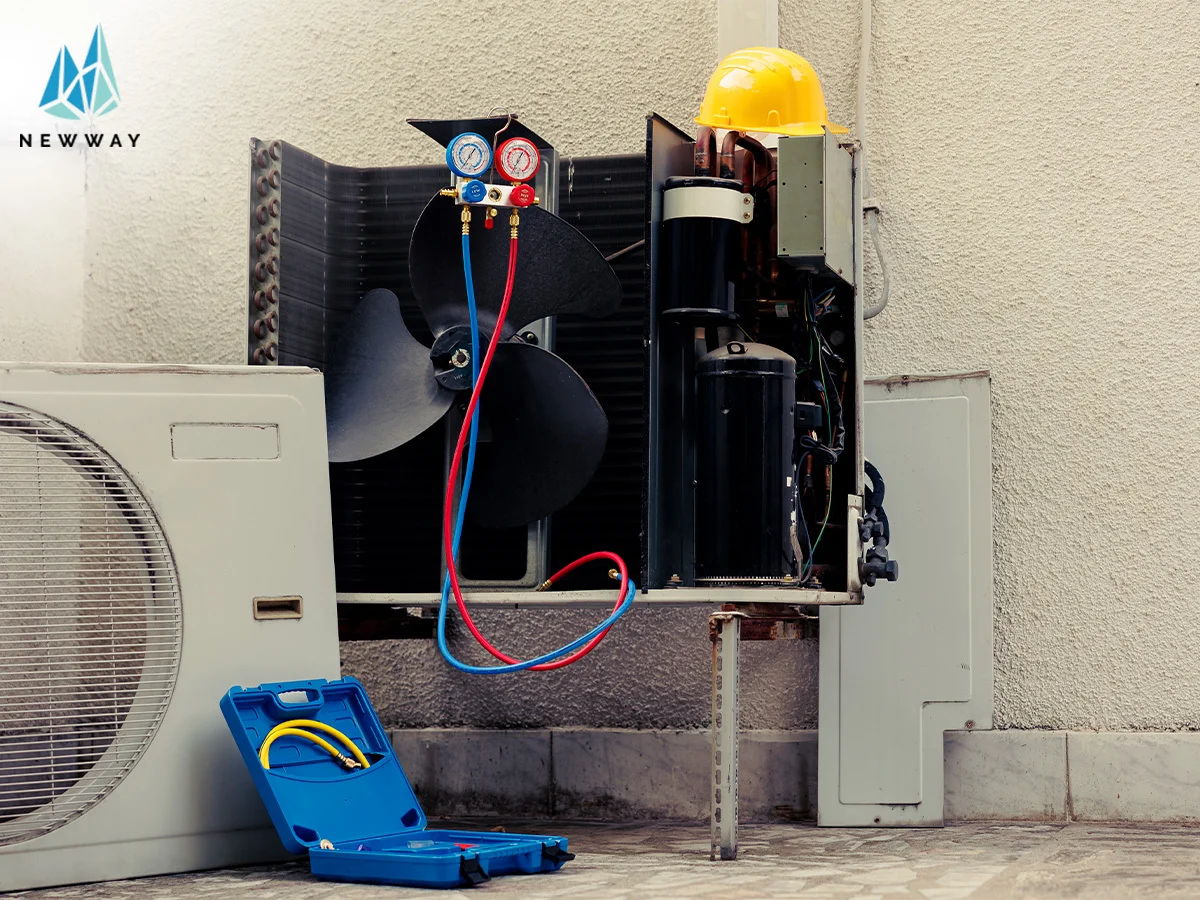
The compressor plays a fundamental role in the air conditioning process. Its primary function is to circulate refrigerant throughout the system. This works by compressing refrigerant vapour to increase its pressure and temperature. The refrigerant then releases heat efficiently and cycles through the system, maintaining the desired indoor temperature.
On top of cooling, the air conditioner compressor also aids in moisture removal. The component helps water evaporate within your AC, extracting excess indoor humidity and converting it into water vapour. Later, the water vapour will be expelled outside. This dual action ensures a comfortable and refreshing indoor environment, particularly in Singapore’s humid conditions.
How Does an Air Conditioner Compressor Work?
To understand how an air conditioner compressor works, it helps to visualise the refrigerant cycle—which is a continuous loop that absorbs heat from your indoor space and releases it outside. The compressor plays a central role in driving this process by pressurising the refrigerant and pushing it through the system.
1. Intake of Low-Pressure Refrigerant Gas
The cycle begins with the compressor drawing in low-pressure, low-temperature refrigerant gas from the evaporator coil. At this stage, the refrigerant has absorbed heat from your indoor air and is ready to be pressurised.
2. Compression into High-Pressure Gas
Inside the air conditioner compressor, the refrigerant is compressed, significantly increasing its pressure and temperature. This high-energy gas now carries heat and is pushed toward the condenser coil.
3. Heat Release in the Condenser Coil
As the high-pressure refrigerant gas moves through the condenser coil (located outside the building), it releases its stored heat to the outdoor environment. The gas cools down and condenses into a high-pressure liquid.
4. Return of Cooled Refrigerant to the Evaporator Coil
The refrigerant then passes through an expansion valve, reducing its pressure and temperature before re-entering the evaporator coil indoors. Here, it absorbs heat from your room once again, restarting the cooling cycle.
By constantly repeating this cycle, your air conditioner maintains a comfortable indoor climate.
Types of Air Conditioner Compressors You Might Have
The type of compressor in your air conditioning unit can affect everything from energy efficiency to noise level and cooling performance. Here’s a quick guide to common air conditioner compressor types used in Singapore homes and offices.
Reciprocating Compressor
This is one of the most commonly used type of air conditioner compressor. It works like a piston engine, using back-and-forth motion to compress refrigerant.
Pros:
- Affordable
- Widely available
- Relatively easy to maintain
Scroll Compressor
The scroll compressor uses two spiral-shaped components to compress refrigerant more smoothly.
Pros:
- Quieter
- More efficient than reciprocating models
- Fewer moving parts
Rotary Compressor
Often found in compact split-type aircon units, the rotary compressor compresses refrigerant using a rotating motion inside a cylinder.
Pros:
- Compact
- Low-noise
- Ideal for smaller spaces
Inverter Compressor (Variable-Speed)
The inverter compressor adjusts its speed based on the cooling demand, rather than switching on and off like traditional models.
Pros:
- Significantly improves energy efficiency
- Maintains a more stable temperature
- Ideal for Singapore’s hot and humid climate
Which Compressor Does Your Aircon Use?
Different air conditioners use different compressor types, each offering unique benefits. Here’s a quick breakdown to help you identify which type your system uses:
| Compressor Type | How It Works | Common In | Key Benefits |
|---|---|---|---|
| Reciprocating Compressor | Uses piston-like back-and-forth motion to compress refrigerant | Older split units, entry-level systems | Affordable, easy to maintain |
| Scroll Compressor | Two spiral scrolls compress refrigerant smoothly | Mid-range to premium systems | Quiet, efficient, fewer moving parts |
| Rotary Compressor | Rotating cylinder compresses refrigerant | Compact and smaller split units | Low noise, compact, ideal for small rooms |
| Inverter (Variable-Speed) Compressor | Adjusts speed based on cooling demand | Most modern energy-efficient units | Highest efficiency, stable temperature, excellent for SG climate |